
Nga ToT te pilotimi: një hap i ri për fuqizimin e këshillave bashkiake në Shqipëri!

Pas një pune intensive dhe të përkushtuar për hartimin dhe zhvillimin e kurrikulës së trajnimit “Roli i Këshillave Bashkiake në Politikëbërjen Strategjike, Planifikimin dhe Monitorimin Vendor”, ekipi i CCIS ka nisur fazën e pilotimit të saj me anëtarët e këshillave bashkiake, pas përfundimit të suksesshëm të procesit të Trajnimit të Trajnerëve (ToT).

Ky moment përfaqëson një hap të rëndësishëm për TALGA (Akademia për Vetqeverisjen Vendore) në forcimin e kapaciteteve të këshillave bashkiake për të ushtruar në mënyrë më efektive rolin e tyre në planifikimin strategjik, buxhetimin, monitorimin dhe vendimmarrjen e bazuar në evidencë. Një falënderim i veçantë shkon për Lorena Totoni dhe Lindita Oshafi, për profesionalizmin, përkushtimin dhe punën e palodhur në zhvillimin dhe pilotimin e kësaj kurrikule.

Ky proces do të pasohet në javët në vijim nga trajnimet kombëtare me këshillat bashkiake në të gjithë Shqipërinë, duke kontribuar në ndërtimin e një qeverisjeje vendore më të fortë, më transparente dhe më pranë qytetarëve.

Kjo iniciativë zhvillohet në kuadër të programit Bashki të Forta (BtF), zbatuar nga Helvetas, me mbështetjen financiare të Switzerland dhe Sweden, të cilat vijojnë të mbështesin forcimin e demokracisë vendore dhe zhvillimin e kapaciteteve të institucioneve lokale në Shqipëri.


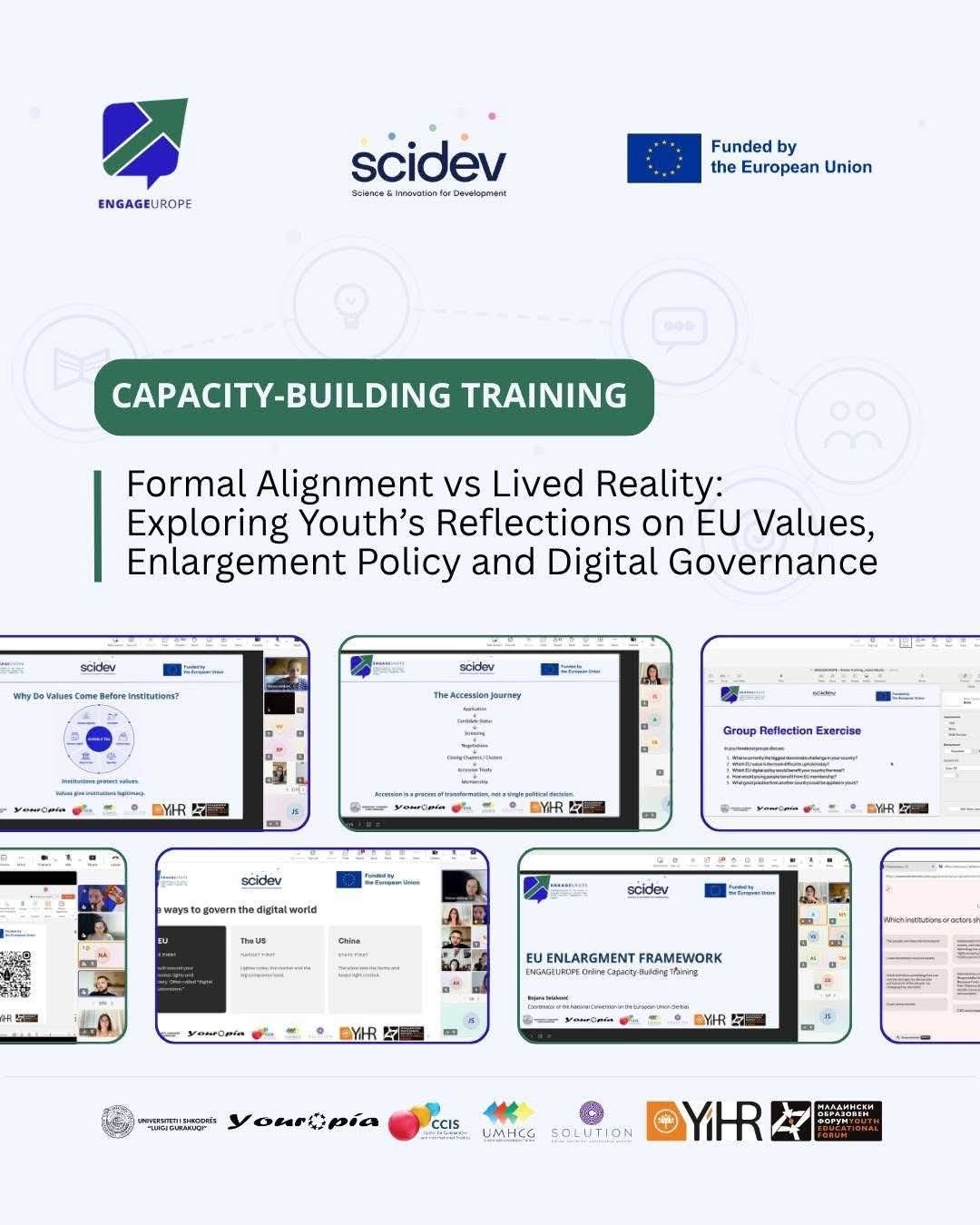
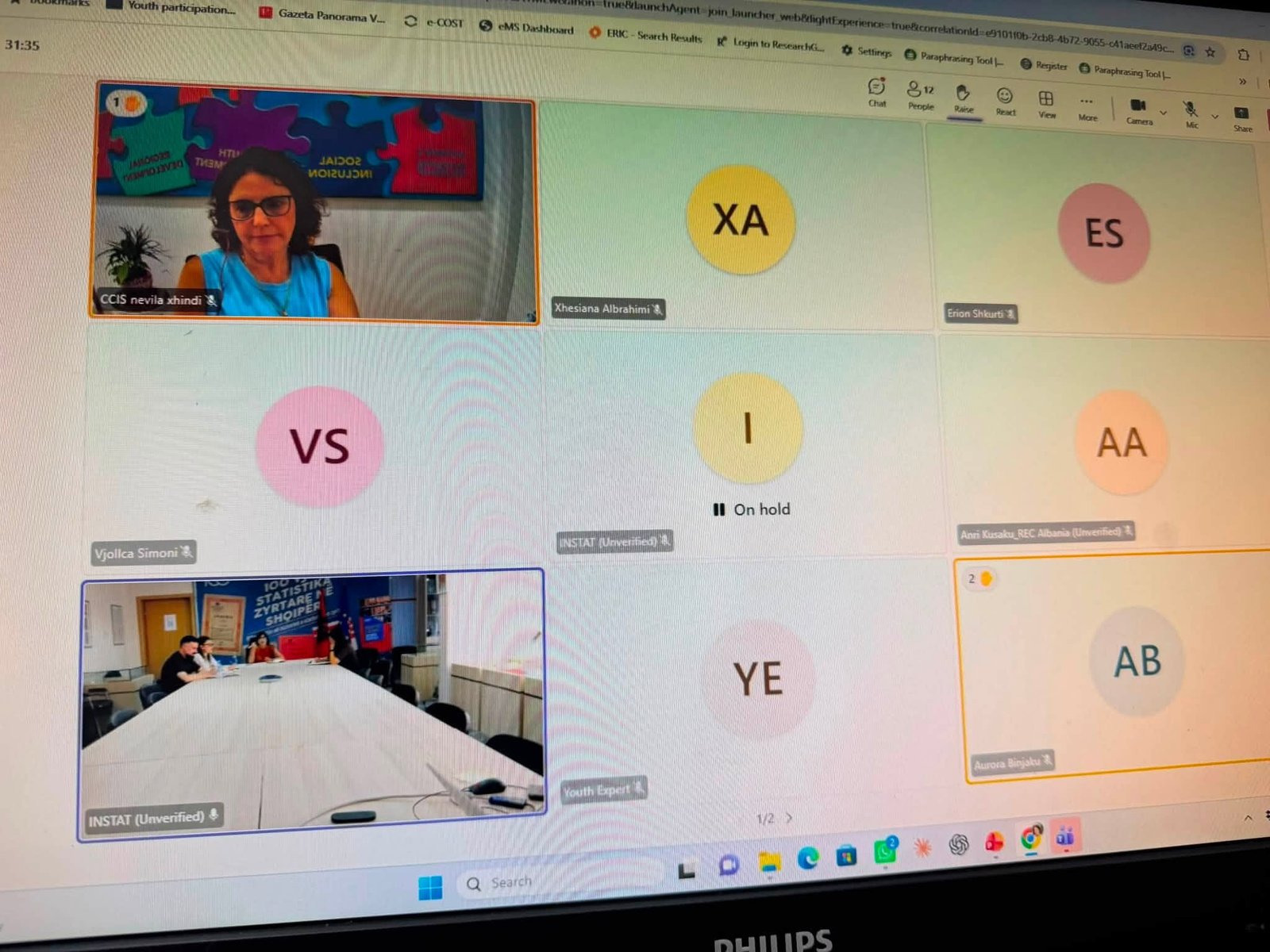
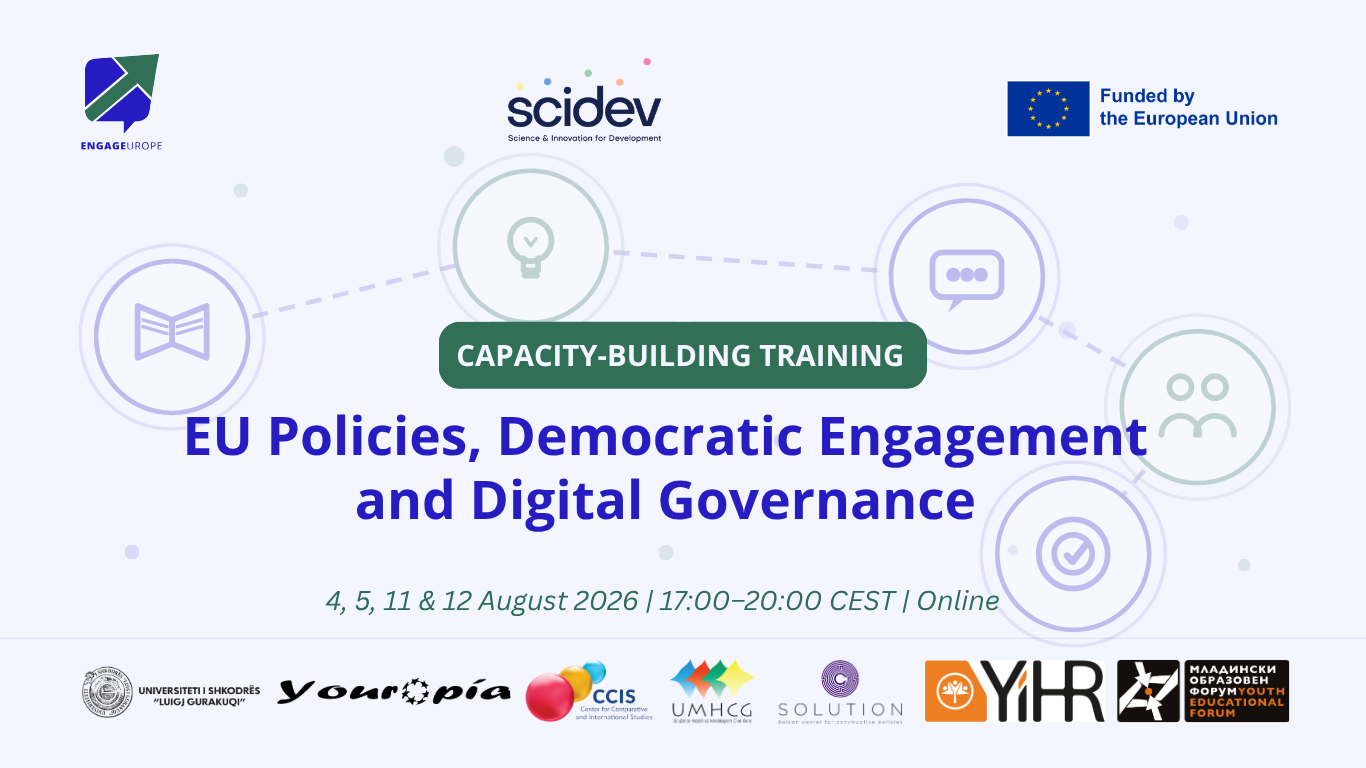
Young Voices, Stronger Democracy: The Launch of ENGAGEUROPE in Tirana!

Across Europe, democratic participation is being reshaped by new political, social and digital realities. Young people are directly affected, yet their voices are still too often treated as secondary.

On 17 June 2026, we are officially opening the #ENGAGEUROPE Youth & Democracy Forum in #Tirana, marking the public launch of #ENGAGEUROPE, and bringing together young citizens, civil society actors, academia, media, and policymakers from across Europe and the Western Balkans.

The Forum will explore how young people can contribute to Europe’s democratic future through civic participation, EU enlargement debates, digital governance and youth-led advocacy, through two interactive panels, a collaborative youth session, and a local youth dialogue in Shkodra organised in cooperation with Universiteti i Shkodrës ‘Luigj Gurakuqi’.

ℹ️ ENGAGEUROPE is led by SCiDEV (Albania), and implemented in partnership with Universiteti i Shkodrës ‘Luigj Gurakuqi’ (Albania), Asociación cultural YOUROPÍA (Spain), CCIS Albania, Youth Educational Forum (North Macedonia), @umhcg_aydm (Montenegro), @solucija_bckp (North Macedonia), @yihr_cro (Croatia), and @inicijativa (Serbia). The project is funded by the European Union under the Citizens, Equality, Rights and Values (#CERV) Programme.

Deklaratë e Përbashkët mbi Ndryshimet në Rregulloren e Kuvendit – 31 Organizata Nënshkruese!

CCIS së bashku me 29 organizata të tjera të shoqërisë civile, i bëjnë thirrje Kuvendit të Shqipërisë të sigurojë që zbatimi i procedurës së përshpejtuar për legjislacionin e integrimit europian të shoqërohet me garanci të qarta për ushtrimin e mbikëqyrjes parlamentare, transparencës, konsultimit publik dhe cilësisë së procesit ligjbërës.

Konsultimi publik duhet të nisë që në fazat e hershme të përgatitjes së politikave apo projektligjeve nga ministritë dhe insitucionet propozues, përpara se këto projektligje të aprovohen nga Këshillii Ministrave dhe t’i paraqiten Kuvendit.

Kjo çështje merr rëndësi të veçantë pas Konferencës së 8-të Ndërqeveritare dhe hyrjes në fazën përmbyllëse të Grupkapitullit 1 – Themeloret, ku vlerësimi nuk lidhet thjesht me miratimin e ligjeve, por me krijimin e një historiku të qëndrueshëm dhe të monitorueshëm të reformave, duke përfshirë edhe zbatimin, transparencën, konsultimin dhe mbikëqyrjen parlamentare.

I kërkojmë Kuvendit të Republikës së Shqipërisë që, në bashkëpunim me institucionet propozuese dhe në kuadër të rolit të tij ligjvënës dhe mbikëqyrës, të garantojë:

✔️ Arsyetim publik për përdorimin e procedurës së përshpejtuar
✔️ Dokumentacion të plotë përpara shqyrtimit në komision
✔️ Konsultim dhe shqyrtim real për ligjet me ndikim të lartë
✔️ Procedurë të zakonshme për projektligje komplekse ose me ndikim të gjerë
✔️ Mbikëqyrje parlamentare mbi zbatimin e legjislacionit të integrimit europian
✔️ Gjurmueshmëri publike të procedurës së përshpejtuar

Lexoni deklaratën e plotë në linkun.Declaration_On the quality and transparency of law-making 3 June

Open Call: Join the ENGAGEUROPE Youth Community!

Are you motivated, curious, and ready to actively engage in civic and EU-related issues while shaping your vision for the future of Europe?

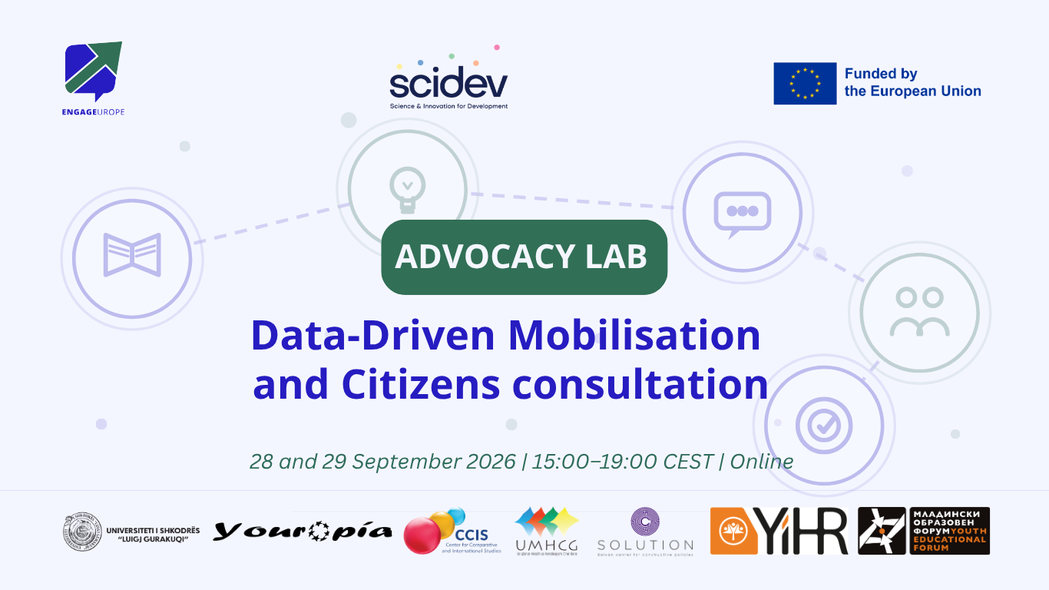
 CCIS is pleased to share the open call to join the #ENGAGEUROPE Community – Mobilising Citizens for the Future of European Democracy through Data-driven Advocacy, Engagement, and Mobility!

Through transnational exchanges, capacity-building activities, advocacy labs, and policy co-creation spaces, participants will have the opportunity to collaborate with peers and stakeholders across Europe on key democratic priorities and contribute their perspectives to EU-level discussions.

 Eligibility criteria:
Young people aged 18–30, residents of partner or eligible countries (Albania, Spain, Montenegro, North Macedonia, Croatia, Serbia, EU and CERV countries), with a good level of English and commitment to the full duration of the programme.

We strongly encourage applications from young women and non-binary youth, young people with disabilities, those from rural areas, and young professionals.

️ Deadline: 3 June 2026
 Fill in the online application https://forms.gle/WjYzsQb3dfJfQJvf8

ℹ️ ENGAGEUROPE is implemented by SCiDEV (Albania) in partnership with Universiteti i Shkodrës “Luigj Gurakuqi”, Asociación Youropia, CCIS Albania, Udruženje mladih sa hendikepom Crne Gore (AYDM), Solucija (North Macedonia), Inicijativa mladih za ljudska prava – Hrvatska, Youth Educational Forum (North Macedonia), and YIHR Serbia. The project is funded by the European Union under the CERV Programme.

Luarasi University and CCIS Advance Training Frameworks for Juvenile Justice Education under CORE-ED Academy

A very productive and forward-looking meeting was held between Luarasi University and the Center for Comparative and International Studies at the premises of Luarasi University, focusing on one of the key deliverables of the project “Transformative Educational Strategies: Fostering Inclusion and Shared Values in Juvenile Justice through Dynamic Correctional Pedagogy and Specialist Professionalization, Empowered by the ‘LiberateSkills’ Correctional Excellence Pact for Skills” (Project: 101179359 — CORE-ED ACADEMY — ERASMUS-EDU-2024-CBHE).

The discussion centered on the development of the “Complete Package of Training Guides and Manuals”, led by CCIS with the active contribution of all partner universities. This deliverable represents a major milestone in shaping innovative learning approaches in juvenile justice. A particularly significant component of the project is the introduction of two pioneering curricula in correctional pedagogy, among the first of their kind in Europe. These curricula adopt a “pedagogy-first” approach, integrating law, psychology, social sciences, and education to better prepare professionals working with children and youth in contact with the law. The authors’ group is working closely with project partners while actively consulting key stakeholders to ensure relevance, quality, and long-term impact.

The project is funded by the European Union and coordinated by Luarasi University, in partnership with International University of Sarajevo, AAB College, UBT, University of Montenegro, READLAB, Center for Promoting Lifelong Learning, Center for Comparative and International Studies, University of the Aegean, and West University of Timișoara: universiteti Mesdhetar i Shqipërise

Disclaimer: Funded by the European Union. Views and opinions expressed are however those of the author(s) only and do not necessarily reflect those of the European Union or EACEA. Neither the European Union nor the granting authority can be held responsible for them.

#COREEDAcademy #ErasmusPlus #JuvenileJustice #HigherEducation #CapacityBuilding #InnovationInEducation #CorrectionalPedagogy #CCIS #LuarasiUniversity #EUProjects

Training of Trainers për Kurrikulën mbi Shërbimet Publike dhe Mbikëqyrjen nga Këshillat Bashkiakë

Training of Trainers për Kurrikulën mbi Shërbimet Publike dhe Mbikëqyrjen nga Këshillat Bashkiakë

Më 26–27 mars 2026, ekspertët e Qendrës për Studime Krahasuese dhe Ndërkombëtare (CCIS) zhvilluan Training of Trainers (ToT) për kurrikulën nr. 3 me temë: “Politikat, instrumentet (entet/ndërmarrjet) për shërbimet publike dhe mbikëqyrja nga këshilli e performancës dhe e kontratave për shërbimet publike, si dhe menaxhimi i aseteve për ofrimin e tyre.”

Ky trajnim është pjesë e përpjekjeve për forcimin e kapaciteteve të këshillave bashkiakë në Shqipëri, duke u fokusuar në rolin e tyre në politikëbërje, përdorimin e instrumenteve ligjore dhe mbikëqyrjen efektive të performancës së shërbimeve publike dhe kontratave me të tretët.

Trajnimi u zhvillua në kuadër të Akademisë së Trajnimeve për Qeverisjen Vendore (TALGA) dhe projektit “Bashki të Forta”, financuar nga SDC dhe Qeveria e Suedisë, dhe zbatuar nga Helvetas, në bashkëpunim me ASPA, AMVV dhe Shoqatën Kombëtare të Bashkive të Shqipërisë.
Kurrikula është hartuar nga CCIS, ndërsa ToT u realizua me kontributin e ekspertëve Nevila Xhindi, Dhurata Çupi dhe Olta Qejvani, me mbështetjen e Artan Rroji.

Qëllimi i këtij trajnimi ishte përgatitja e një rrjeti trajnerësh kombëtarë, të cilët do të vijojnë të zhvillojnë trajnime për këshillat bashkiakë në të gjithë vendin, në kuadër të TALGA.

Disclaimer: Me mbështetjen e Helvetas International Cooperation Albania në kuadër të projektit “Bashki të Forta” për Contract-no: C- 032/2025 /Project no: 1401.04.3.0 “Technical Assistance for Supporting the Development of three Training Curricula for the Municipal Councils in Albania”


Youth as Partners, Not Beneficiaries: What the Y-O Model Achieved and Where It Points Next

Youth participation is a term that appears in almost every policy document concerning young people in the Western Balkans. Yet, the gap between stated commitment and meaningful practice has become one of the defining frustrations for a generation increasingly disillusioned with democratic institutions.

The project “A Cross Regional Predictive Model for Youth Policy Shaping – Youth Observers” (Y-O Model), funded by the European Union under the Erasmus+ Capacity Building in Youth programme, was built on a different premise. Instead of asking young people to take part in processes designed by others, it explored what becomes possible when youth are positioned as co-organisers from the very start.

The Y-O Model unfolded in three interconnected phases. The first phase focused on the youth observers themselves, providing capacity-building sessions that combined policy analysis methodology with leadership training, alongside study visits to public institutions and civil society actors across partner countries. These visits gave participants direct access to high-level decision-makers.

The second phase put this preparation into practice. Youth observers led national stakeholder consultations, mapping relevant actors, testing initial policy assumptions, and building relationships needed to collect data. They then convened and facilitated national roundtables to test their preliminary findings with the same stakeholders.

The third phase involved the production of six policy papers addressing youth mental health, employability, and political participation. These were not commissioned reports; they were researched, drafted, and presented by the youth observers themselves, with support from mentors in partner organisations, in direct engagement with the institutions they were analysing.

The project’s impact was felt on three levels. For the youth observers, the experience marked a transition from participation to civic agency. Moving through the full cycle—from capacity building to stakeholder consultation to policy contribution—strengthened their confidence and motivation to remain active in youth policy beyond the project period.

For partner organisations, sustained collaboration enhanced institutional capacity to work with and for young people. The establishment of informal national youth observer networks extended each organisation’s reach and laid a foundation for ongoing engagement.

At the institutional level, the roundtable process demonstrated that meaningful collaboration between youth, civil society, public institutions, and international organisations is possible even in contexts where cross-sectoral trust is difficult to build. Stakeholders were engaged not merely as an audience for conclusions, but as active participants in the research process itself.

You can download & read the document: Y-O-Model-Project-Summary-Report-1

Disclaimer: This document is produced in the framework of the ERASMUS-YOUTH-2023-CB: A cross regional predictive model for youth policy shaping – Youth Observers. Funded by the European Union. Views and opinions expressed are however those of the author(s) only and do not necessarily reflect those of the European Union or European Education and Culture Executive Agency. Neither the European Union nor the granting authority can be held responsible for them.

CCIS 2025 Annual Report

We are proud to present the 2025 Annual Report of CCIS, a year defined by growth, impactful partnerships, and meaningful change across the region.

As a dynamic and forward-looking think tank, CCIS continued to strengthen international cooperation, applying global expertise to inform decision-making and support sustainable-development. Throughout 2025, our work focused on applied research, #capacitybuilding, and collaborative projectimplementation, reinforcing our role as a partner for governments, institutions, and communities.

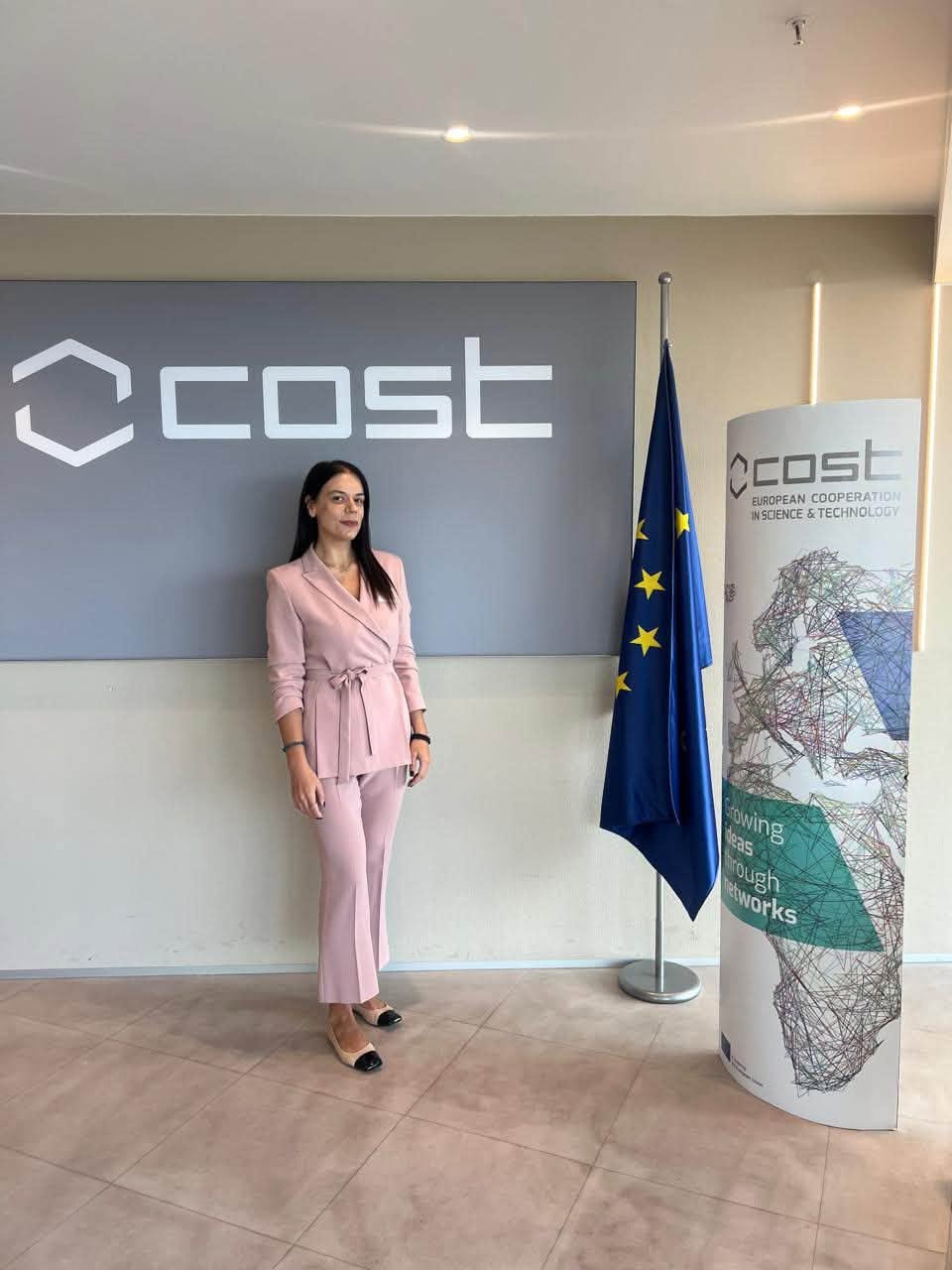
This year marked important milestones, including initiatives that empowered youth, advanced inclusive education and employment, strengthened trust in data, and supported local governance. From leading major European initiatives such as the HUMAN-IT COST Action, to implementing impactful Erasmus+ projects and fostering dialogue with young people across Albania, CCIS remained committed to building resilient, inclusive, and future-oriented societies.

We invite you to explore our journey, achievements, and impact throughout 2025!

You can download and read the report here: Annual Report 2025 CCIS

New Project: ENGAGEUROPE – Mobilising Citizens for the Future of European Democracy through Data-driven Advocacy, Engagement, and Mobility

We are excited to announce a new project, ENGAGEUROPE – Mobilising Citizens for the Future of European Democracy through Data-driven Advocacy, Engagement, and Mobility, where CCIS is a partner.

In a time when democratic participation and trust in institutions are increasingly challenged across Europe, ENGAGEUROPE brings together civil society and academic partners to strengthen civic engagement, dialogue, and citizen participation in shaping the future of the European Union.

Led by SCiDEV and funded by the European Union under the CERV Programme, the project will run from February 2026 to September 2027, engaging partners from across Europe and the Western Balkans.

As a partner, CCIS will contribute to fostering structured dialogue, youth engagement, and evidence-based policy discussions on key EU priorities, including democratic governance, enlargement, and digital transformation.

We look forward to contributing to a more inclusive, participatory, and forward-looking European democracy.

Disclaimer: In the framework of the project “Mobilising Citizens for the Future of European Democracy through Data-driven Advocacy, Engagement, and Mobility” (ENGAGEUROPE, Project No. 101253265), funded by the European Union under the Citizens, Equality, Rights and Values Programme. Views and opinions expressed are those of the author(s) only and do not necessarily reflect those of the European Union or the European Education and Culture Executive Agency.

EYDR Project Summary Report Now Available!

Digital participation should go beyond access and technical skills. The key democratic question is whether young people are meaningfully involved in shaping the rules that govern the digital space.

As a partner in the EYDR – Youth Participation in Digital Democracy project, CCIS contributed to strengthening youth agency in digital democracy across Albania, Montenegro, Serbia and Spain. Over two years, the project combined research, capacity building and cross-border cooperation to support young people in moving from digital engagement to policy influence.

Through mapping research, the Youth Digital Democracy Accelerator Programme and international exchanges in Belgrade and Oviedo, the initiative helped translate lived digital experiences into structured democratic participation and policy-relevant advocacy.

EYDR demonstrates that digital transformation must be accompanied by democratic safeguards, rights-based governance and meaningful youth inclusion.

Read the full EYDR Project Summary Report here: EYDR Project Summary Report

DISCLAIMER: This article is part of Youth Participation in Digital Democracy: From Digital Skills to Digital Rights of Youth with Fewer Opportunities (EYDR) project, aimed to strengthen the capacities of Albanian and Montenegrin youth to meaningfully engage in digital activism through an approach that balances protection and digital participation.

EYDR is funded by the Erasmus Capacity Building in the Field of Youth of the European Union and is implemented under the leadership of SCiDEV in partnership with UZORBeogradskicentar za ljudskaprava, AsociaciónYouropia, Centre for Comparative International StudiesErasmus Student Network in AlbaniaNational Youth Agency in Albania, and SHARE Foundation. Opinions in this article are solely of the author and do not necessarily represent the views European Union stand on the matter.