The CCIS Youth Observers Blog Series continues with a new contribution exploring one of the most important challenges facing education systems today.
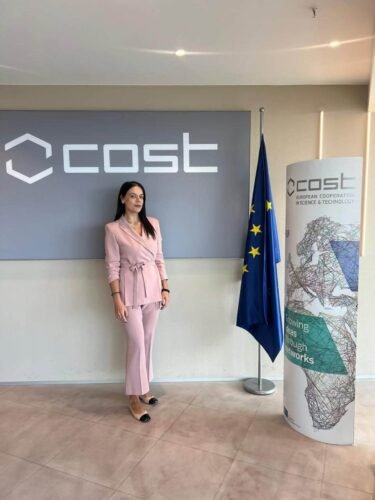
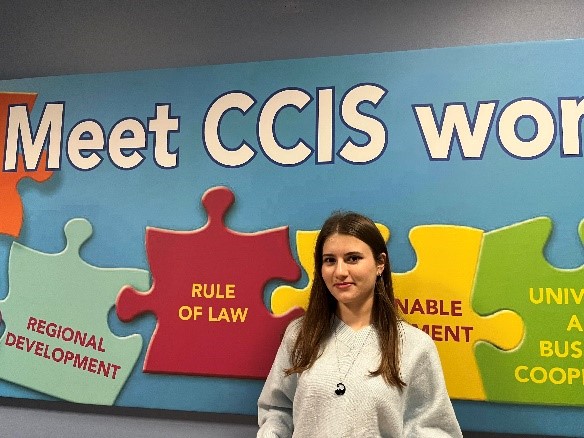
In “Fighting Corruption in Education: A Student’s Perspective on Change in Albania,” Sindi Myrta, Assistant Researcher at CCIS and a Software Engineering student at the European University of Tirana, reflects on the impact of corruption in education and the importance of transparency, accountability, and youth engagement in promoting meaningful reform.
As a member of the CCIS Youth Observers group, Sindi contributes to fostering evidence-informed dialogue on issues that affect young people and encourages greater youth participation in shaping public policies.
Read the full article:
This article has been prepared by a Youth Observer as part of the “A Cross Regional Predictive Model for Youth Policy Shaping – Youth Observers (Y-Os)” project, funded by the European Union through the Erasmus+ Capacity Building in the Field of Youth programme.
The views and opinions expressed are those of the author and do not necessarily reflect those of the European Union, the European Education and Culture Executive Agency (EACEA), or the Youth Observer Model project partners. Neither the European Union, EACEA, nor the project partners can be held responsible for the content of this publication.
From: Mrs. Sindi Myrta
Sindi Myrta is an Assistant Researcher at CCIS and a Software Engineering student at the European University of Tirana. She is passionate about exploring new ideas and contributing to projects that bring positive change. Sindi is a young activist eager to learn, collaborate, and use her skills to address challenges and make a difference in youth policy in Albania.
December 2024
As a university student in Albania, I often find myself confronting the pervasive issue of corruption in our education system—a problem that deeply affects not just my generation, but the entire nation’s future. From bribery during exams to political interference in curricula, these practices chip away at the credibility of institutions meant to empower young people.
On December 9th, International Anti-Corruption Day, we are reminded of the global fight against corruption, which extends deeply into education systems worldwide. In Albania and across Southeast Europe, the perception of corruption in education remains alarmingly high. According to the FES Youth Study SEE, in 2024, 62.9% of respondents across Southeast Europe believe grades and exams are “bought” in educational institutions, a slight improvement from 65.4% in 2018. Alarmingly, 73.9% of young people in Albania in 2024 believe grades and exams can be “bought,” a slight improvement from 74.9% in 2018. This lack of trust demotivates students, making them feel their efforts are undervalued in a system that often rewards money and connections over merit.
While this indicates a small step forward, the numbers are still concerning, especially compared to Western Europe, which scored an average of 66 out of 100 on the 2021 Corruption Perceptions Index (CPI).
This lack of trust creates discouragement. Many students feel disheartened, believing that academic success often depends on financial means or connections rather than merit. This not only demotivates hardworking students but also perpetuates a culture where integrity is undervalued.
Despite these challenges, I remain optimistic about the power of my generation to bring about change. We live in an era where technology and innovation provide tools to challenge the status quo. Digital platforms can expose corruption, amplify our voices, and demand accountability. Programs like the Erasmus+ project, A cross regional predictive model for youth policy shaping – Youth Observers, empower young people like me to acquire digital skills and use them to advocate for justice and fairness in Albania.
To create an education system built on merit, fairness, and transparency, we must demand structural reforms. This includes digitalizing administrative processes to reduce opportunities for bribery, establishing independent anti-corruption bodies, and fostering open discussions about ethical behavior.
This December, as we reflect on the role of integrity in shaping our society, let us commit to building a future where hard work and merit are celebrated. Change starts with us—students, educators, policymakers, and citizens—working together to create a system that serves the people, not the powerful. Together, we can ensure that education remains a tool for empowerment, not exploitation.
Let this be the December we look back on as the beginning of a brighter future for Albania.
____________________________________________________________________________
* This article is produced in the framework of the ERASMUS-YOUTH-2023-CB: A cross regional predictive model for youth policy shaping – Youth Observers. Funded by the European Union. Views and opinions expressed are however those of the author(s) only and do not necessarily reflect those of the European Union or European Education and Culture Executive Agency. Neither the European Union nor the granting authority can be held responsible for them.
© Y-O Model
All rights reserved.